ข้อมูลทรัพยากร
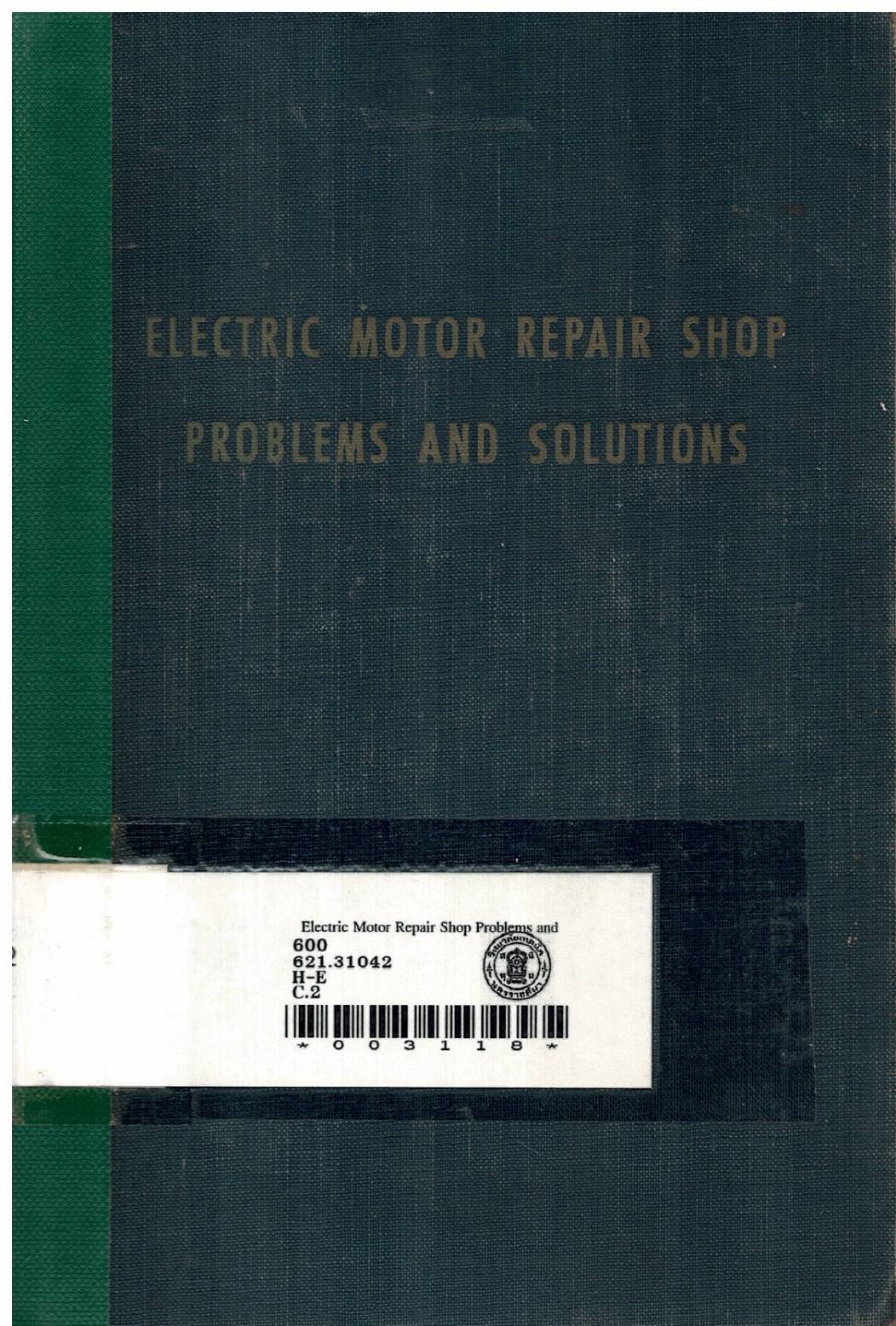
Electric Motor Repair Shop Problems and Solutions.
ประเภททรัพยากร : หนังสือเล่ม
ชั้นเก็บ : ตู้ 9 ชั้น 1 ฝั่งซ้าย
หมวด : 600
เลขหมู่หนังสือ : 621.31042
สำนักพิมพ์ : Datarule publishing co.
ผู้แต่ง : Heller Sanyek.
ยอดคงเหลือ : 1
เนื้อหาย่อ : In the Years since the first edition of Electric Machinery Fundamentals was
blished, there has been rapid advance in the development of largera
sophisticated solid-state motor drive packages. The first edition of this book stated
dc motors were the method of choice for demanding variable-speed appli
ns. That statement is no longer true today. Now, the system of choice for s
control applications is most often an ac induction motor with a solid-state motor
drive. DC motors have been largely relegated to special-purpose applications
re a de power source is readily available, such as in automotive
systems.
The third edition of the book was extensively restructured to reflect these
anges. The material on ac motors and generators is now covered in
ugh 7, before the material on de machines. In addition, the de machi
erage was reduced compared to earlier editions. The fourth edition continues with
this same basic structure.
hapter 1 provides an introduction to basic machinery concepts,
des by applying those concepts to a linear de machine, which is the sin
possible example of a machine. Chapter 2 covers transformers, and Chapter 3 is
uction to solid-state power electronic circuits. The material in Chap
is optional, but it supports ac and dc motor control discussions in Chapters 7, 9,
and 10.
After Chapter 3, an instructor may choose to teach either dc or ac machin-
ery first. Chapters 4 through 9 cover ac machinery, and Chapters 8 and 9 cover dc
hinery. These chapter sequences have been made completely independer
each other, so that instructors can cover the material in the order that best suits
their needs. For example, a one-semester course with a primary concentration in
achinery might consist of parts of Chapters 1 to 7, with any remai
voted to dc machinery. A one-semester course with a primary conce
inery might consist of parts of Chapters 1, 3, 8, and 9, with any re
g time devoted to ac machinery. Chapter 10 is devoted to single-I
special-purpose motors, such as universal motors, stepper motors, brushless dc
motors, and shaded-pole motors.