ข้อมูลทรัพยากร
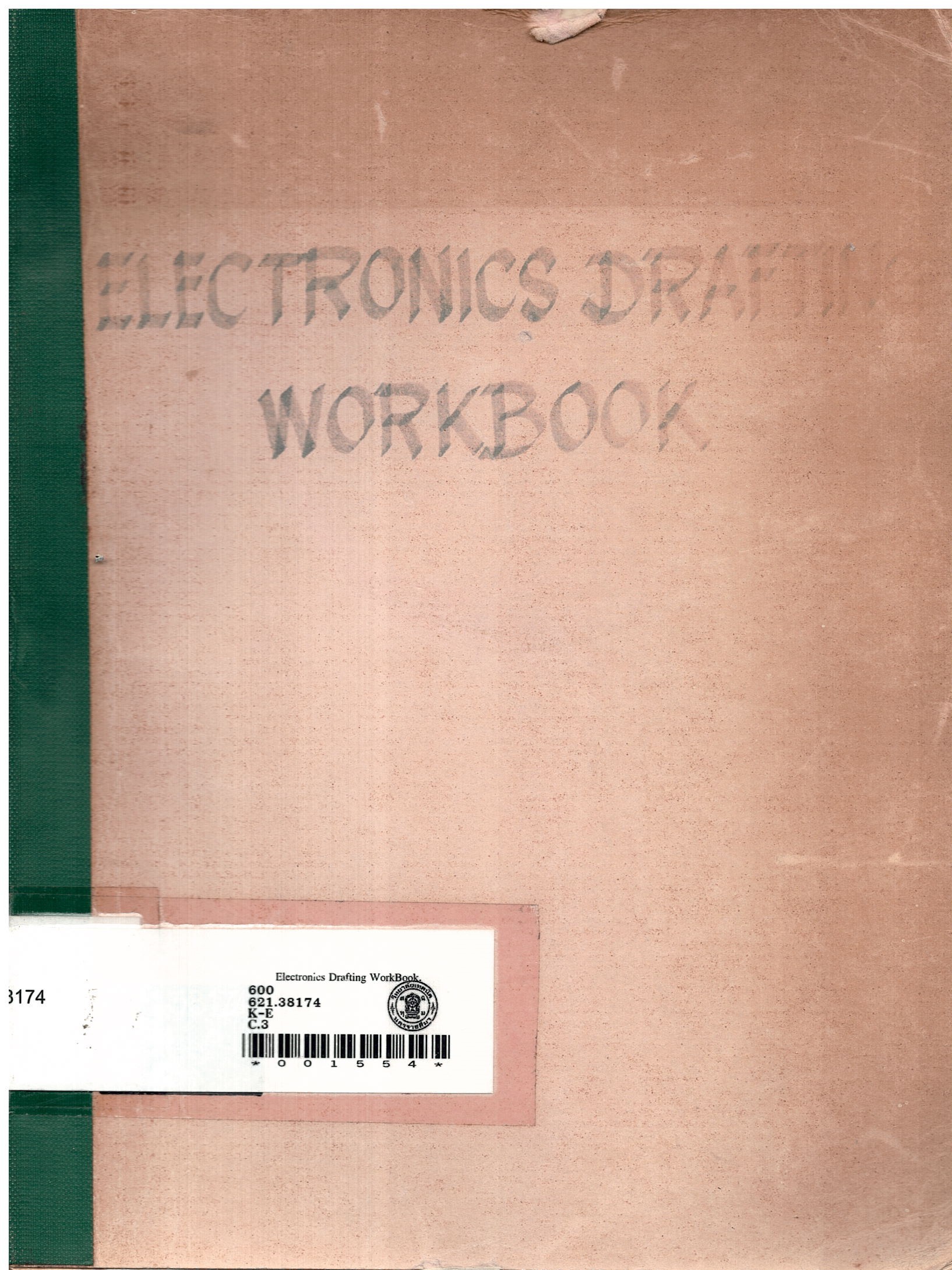
Electronics Drafting WorkBook.
ประเภททรัพยากร : หนังสือเล่ม
ชั้นเก็บ : ตู้ 9 ชั้น 5 ฝั่งซ้าย
หมวด : 600
เลขหมู่หนังสือ : 621.38174
สำนักพิมพ์ : Mc Graw-Hill.
ผู้แต่ง : Kirshner, Cyrus.
ยอดคงเหลือ : 3
เนื้อหาย่อ : Electronics Drafting Workbook was written to give students a realistic feel for elec-
tronics drafting and to supplement the resources of the employed draftsman by means
of the lesson samples and, especially, the appendixes.
The book is written for the student between high school and college, say, the last
two years of high school or the first two years of college. It can also be used easily by
adult education programs as well as by correspondence or home study students. The
material presented is largely based on the electronics drafting course taught t at
Los Angeles Valley College since 1959 for both day and evening classes, as well as
e Adult Occupational Training Center, Woodland Hills, California, with
deal of success. The course at Los Angeles Valley College is credit-transferable to
California Polytechnic Institute (which is fully accredited) and meets the electronics
drafting requirements for the electronics engineer's degree.
The sequence of lessons was designed with these considerations in mind:
1. To progress from a simpler, or more familiar, kind of drawing to one that is
slightly more complex. Therefore it would be well to follow the exercises in order
where feasible.
2. To start the student out immediately doing electronically related drafting, with-
out spending too much time on conventional mechanical drafting review, and to
develop a consecutive interest in electronics drafting concepts.
3. To present the most frequently used types of drawings first and infrequently
used types of drawings last (i.e, based on the experiences of most beginning draftsmen).
4. To culminate the various ideas in a project at the end of the semester, or at
least to indicate how this can be done.
The basic technique of instruction used here is to present a little theory and an
exercise on each page with a step-by-step "learn by doing" approach. Another tech-
ique is to develop the habit of looking up new information (in the appendix, cata-
ogs, etc.) and checking back old information (from previous exercises, drawings, etc.).
authors wish to thank the many people who contributed to the p
of this book. In particular, we would like to mention:
ITT Federal Laboratories, San Fernando, California
Harold Emus, senior member of the technical staff of the ITT Federal Lab-
oratories, San Fernando, California
Carlos Miller, Director of Product Operations, ITT Federal Laboratories, San
Fernando, California
The General Electric Company, for the FM Tuner schematic diagram (page 27)
and the Power Supply schematic diagram (page 55)
RCA, for the color and black and white TV Receiver block diagram (page 20)
The Zenith Electric Co. for the color TV block diagram (page 22)
We would also like to express sincere appreciation to the following firms which
ontributed to, and are represented in, our appen
Arco Electronics, Inc., Alpha Wire Corp., General Electric Company, Grayhill, Inc.,
erman H. Smith, Inc., Hughes Semiconductors, Littelfuse Incorporated, Ohmite Mfg.
Texas Instruments Incorporated, Triad Transformer Corporation, USECO, Vitramon,
Westinghouse Electric Corporation, and Department of Defense Military Standards.