ข้อมูลทรัพยากร
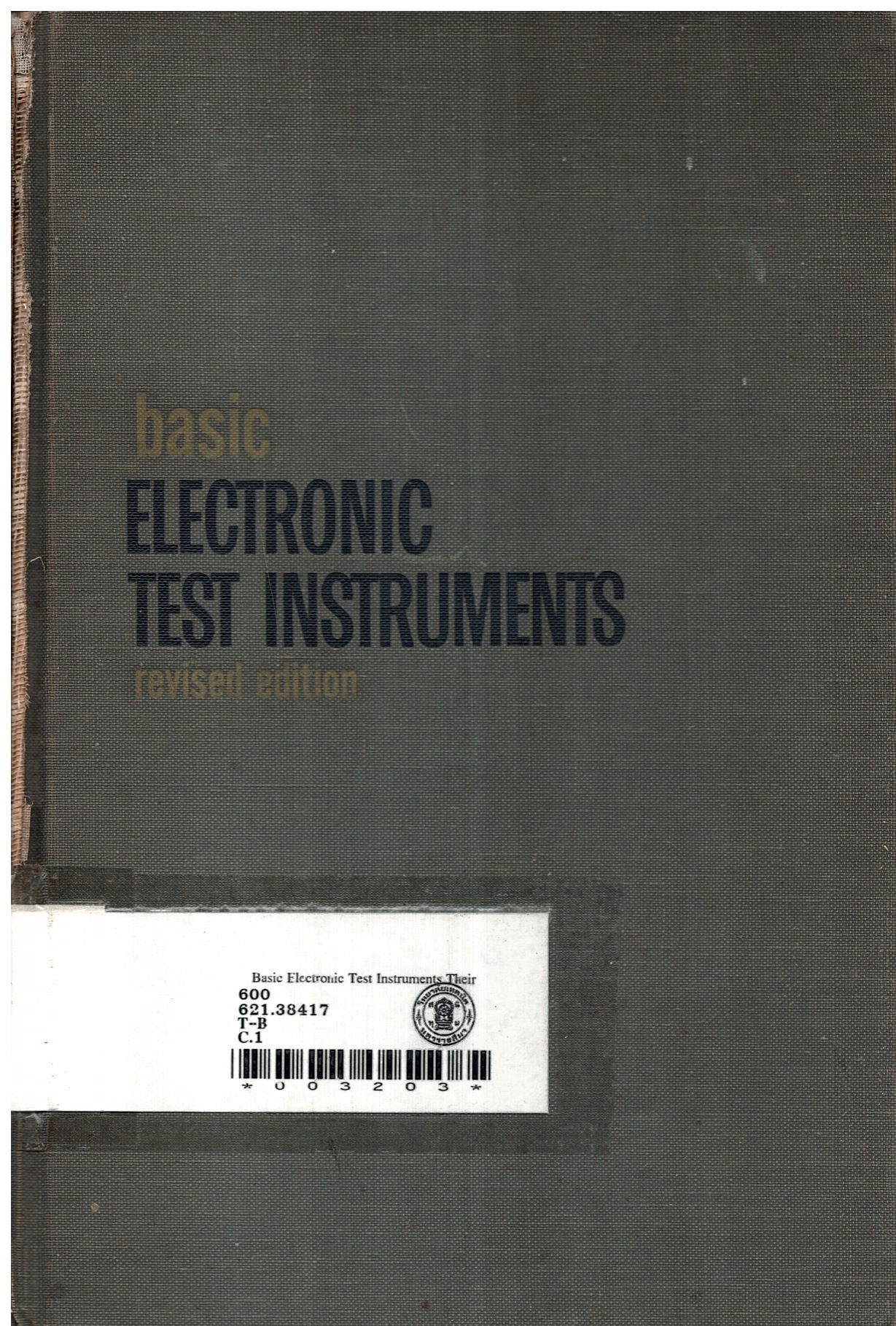
Basic Electronic Test Instruments Their Principles of operation.
ประเภททรัพยากร : หนังสือเล่ม
ชั้นเก็บ : ตู้ 9 ชั้น 5 ฝั่งซ้าย
หมวด : 600
เลขหมู่หนังสือ : 621.38417
สำนักพิมพ์ : Hoalt, Rinehart and Winston, Inc.
ผู้แต่ง : Turner, Rufus P.
ยอดคงเหลือ : 1
เนื้อหาย่อ : Since the original publication of Basic Electronic Test Instruments,
noteworthy progress has been made in test and measuring equipment.
New instruments have been introduced and many old ones have been
changed. It is an important fact that the advancing state of the art
itself has created the need for innovation in and modification of electronic
test gear.
In a similar spirit, this revision of the book, long overdue, embodies no
change for the mere sake of change. Instead, we have done away with the
obsolete, modernized the perennial (where possible), and ushered in the new.
There is no need to catalogue here the additions, changes, and deletions
that have been made. It is sufficient to say that we could not include every
instrument we would have wished to, without swelling the book out of all
sensible proportions; therefore we have obeyed our original aim to discuss
those instruments which are basic to electronic measurements. Necessarily,
e have ignored much equipment, however ingenious, which is highly
specialized. We have described mainly the theory and operation of instru-
ments; for applications and use of instruments, see the author's book Basic
Electronic Test Procedures from the same publisher. The reader will notice
that this revision properly reflects the importance that solid-state devices
and circuitry have achieved since the original publication.
Teachers, engineers, technicians, students, and amateurs will find this
book useful. We hope that they will not hesitate to make suggestions, as
reviously, for its improvement.
The purpose of the book remains the same, that is, to acquaint the
technician with the instruments of his art, their operating principles and
their use, and to make explanations in language that he can understand.
The profuse use of illustrations, and of frequent illustrative examples where