ข้อมูลทรัพยากร
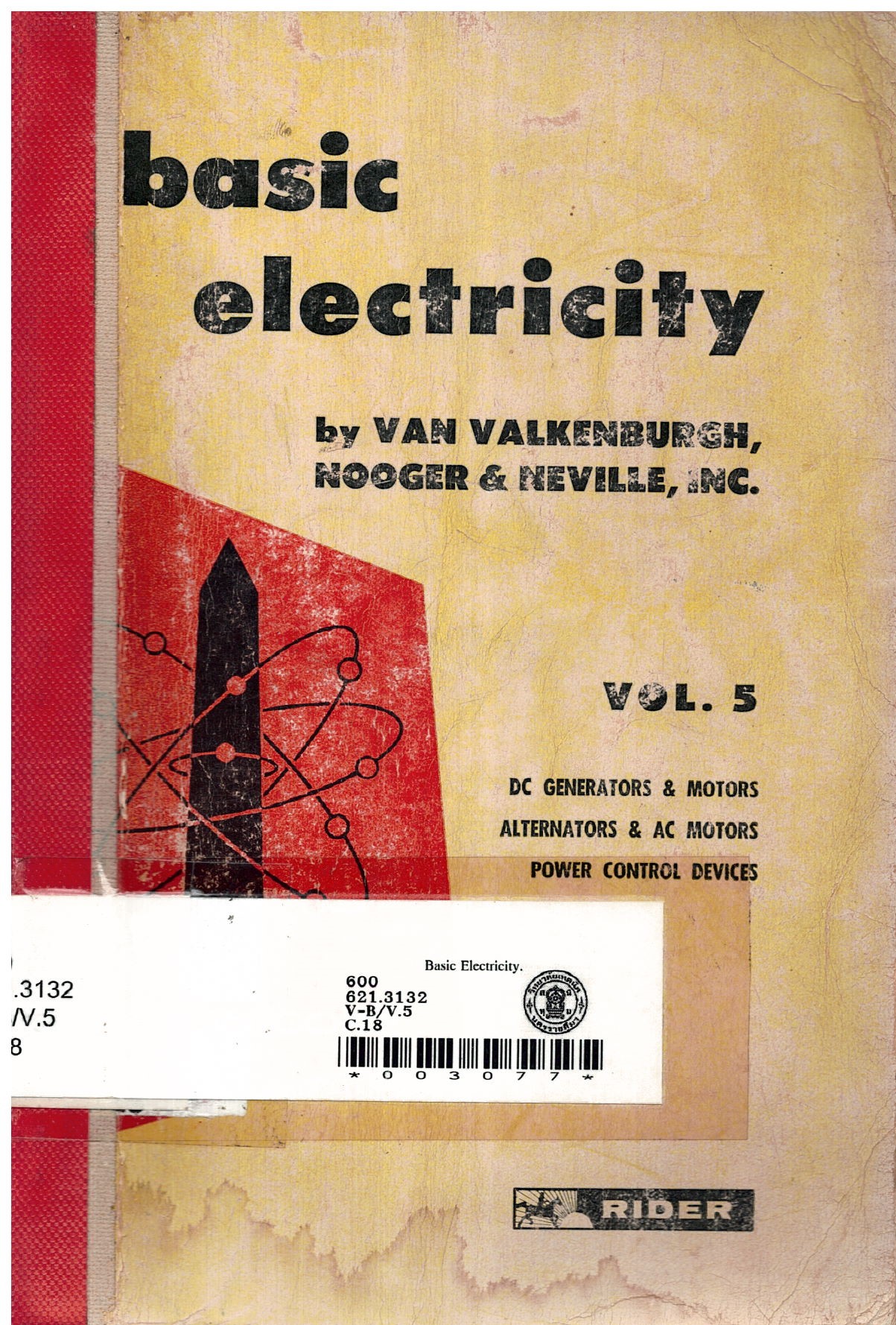
Basic Electricity Vol. 5.
ประเภททรัพยากร : หนังสือเล่ม
ชั้นเก็บ : ตู้ 9 ชั้น 1 ฝั่งซ้าย
หมวด : 600
เลขหมู่หนังสือ : 621.3132
สำนักพิมพ์ : John F. Publisher, Inc.
ผู้แต่ง : Valkenburgh, Van.
ยอดคงเหลือ : 18
เนื้อหาย่อ : beyond the wildest dreams of a mere decade ago. The progress has been so rapid in
e electrical age. Electrical and electronic technology has
some fields that projects still on the drawing boards have had to be discarded because
e new development comes to light, making them obsolete before the
completed.
Those developments which have come to pass read like the "Science Fiction"
of a few years back: Solar batteries power transmitters in orbiting satellites, elec-
computers perform mathematical miracles in seconds, nuclear enery
been successfully converted directly to electrical energy without the customary inter-
mediate steam-turbine steps. But these advanced applications are not the only things
subject to change. These new uses of electrical energy have made a new approach
to electrical instruction all the more necessary.
Not long ago, the direction of electrical current was taught in accordance with
Franklin's notion that electricity moved from the positive to the negative terminal.
Fifty years ago, teachers could have replaced this notion with the more accurate
electron theory. Confirmed by basic experimentation, and reconfirmed in the success
of practical devices built in accordance with the concept, this electron-flow idea is
essential to a straightforward explanation of electronic devices.
Since the electron theory is a concept basic to all electrical and electronic
study, Alternating Current Fundamentals like its companion text, Direct Current
Fundamentals by O. E. Loper, is based upon a sound grasp of the role of the electron.
A prerequisite to this comprehensive presentation of alternating current is a thorough
understanding of direct current circuits, instruments, machines, and control equip-
ment. It is presumed that the student shall have had such basic groundwork before
ceeding to the more complex and involved principles of atternating
erial should bring the student to the threshold of electronics, eq
Study
ose principles essential to successful advanced study in th
represents the second of a three-volume series intended to pr
intensive background of fundamentals of direct current, alternating current, and
s. Each shall have an accompanying manual of selected laborat
ments. gether they provide basic instructional material for those who
und, intensive, technical foundation in electricity and ele