ข้อมูลทรัพยากร
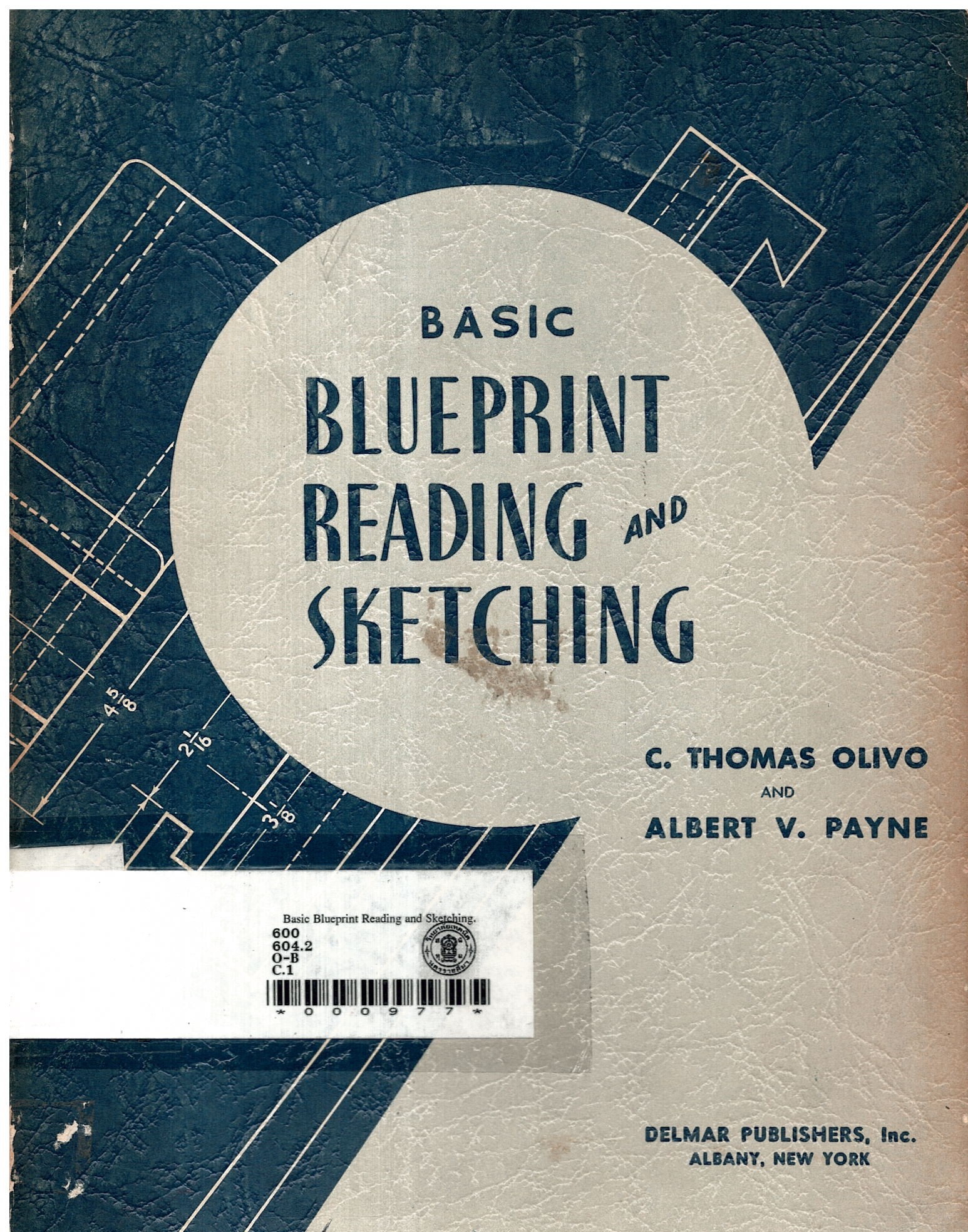
Basic Blueprint Reading and Sketching.
ประเภททรัพยากร : หนังสือเล่ม
ชั้นเก็บ : ตู้ 9 ชั้น 5 ฝั่งขวา
หมวด : 600
เลขหมู่หนังสือ : 604.2
สำนักพิมพ์ : Delmar Publishers, Inc.
ผู้แต่ง : Olivo, C.Thomas.
ยอดคงเหลือ : 7
เนื้อหาย่อ : Blueprints are the guideposts of industry. By their use, both simple and com-
plex parts and mechanisms may be described graphically with such completeness
that one part, or any number of the same part, may be manufactured to the specified
size, shape and degree of accuracy. The blueprint points the way at each stage of
production from the time an original idea is conceived until the product is completed.
were possible to accumulate all blueprints over a long period of ye
would furnish an accurate inventory of manufactured articles and the newer experi-
mental projects. These, in turn, would become a partial historical record of man's
achievements and civilization's progress.
They would tell another story, too, about inter-country dependence and coopera-
tion, since the blueprint is the universal language of craftsmen. While languages
and systems of measurement vary among the various countries of the world, certain
drafting techniques are recognized as standard. Thus, it is possible for craftsmen,
who can interpret drawings, to produce identical parts even though they work in
different lands. This universal language forms the foundation for the production of
interchangeable parts.
Because techniques of representation differ with manufacturers, careful analyses
of drafting room practices and occupational studies were made to determine the blue-
print reading needs of skilled and semi-skilled workers. These comparative studies
of training needs gave direction and emphasized the degree of thoroughness with
each instructional unit had to be organized and
The scope of instructional units in this book is sufficiently broad to insure com-
plete mastery in blueprint reading and to cover the range of drawings, sketches and
prints which mechanics are normally required to read and to interpret accurately.
The individual units incorporate many of the newer tested teaching-learning methods
ulum development practices which both writers have used s
under actual conditions.
Grateful acknowledgment is made to Elmer A. Rotmans, Head of the Drafting
Department, Edison Technical and Industrial High School, Rochester, for the skill-
reparation of the drawings; and to Peter J. Olivo, Associate Directo
culum Research, Delmar Publishers, Inc., for the preparation of final manuscript
for publication.