ข้อมูลทรัพยากร
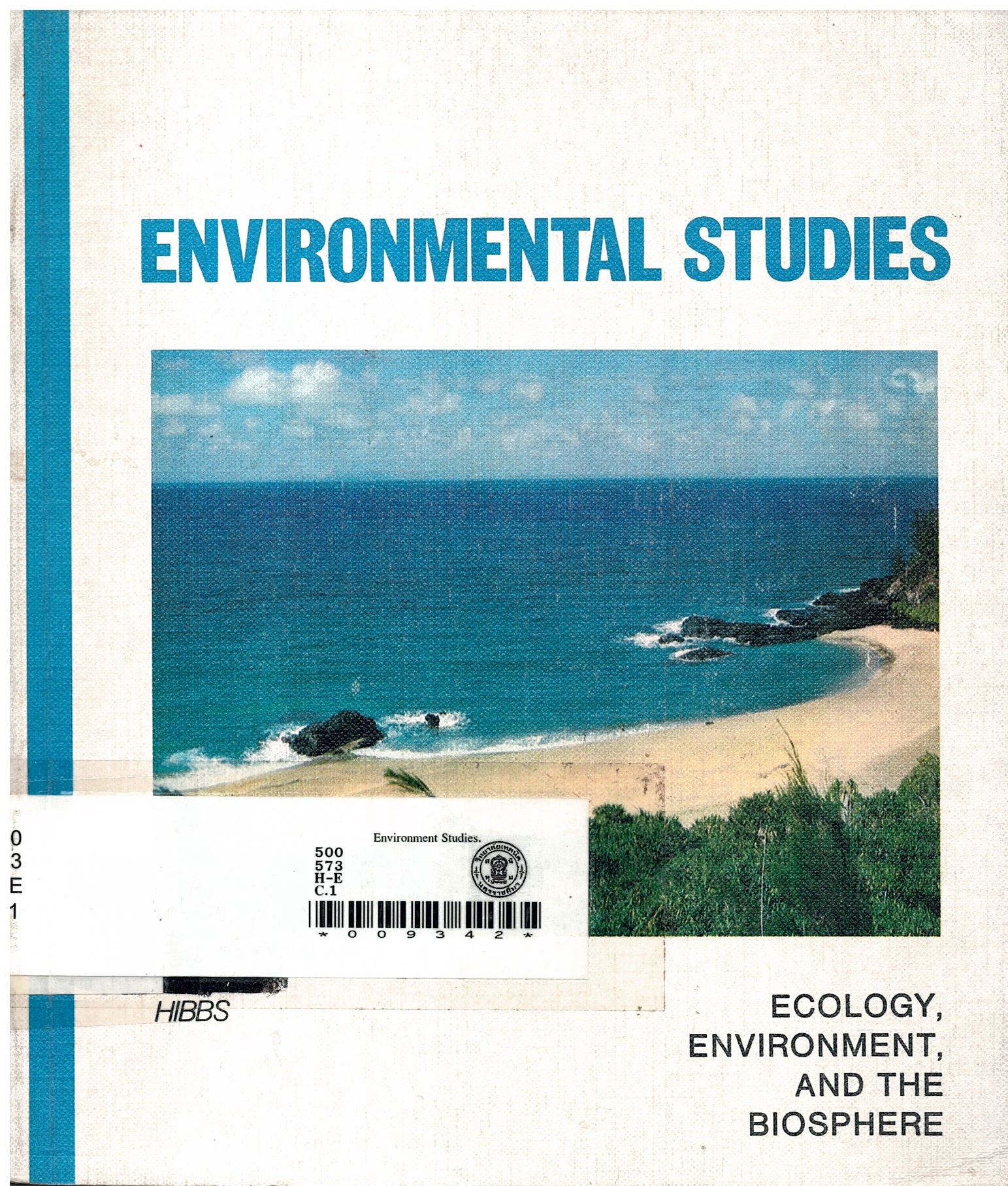
Environment Studies.
ประเภททรัพยากร : หนังสือเล่ม
ชั้นเก็บ : ตู้ 9 ชั้น 5 ฝั่งขวา
หมวด : 500
เลขหมู่หนังสือ : 573
สำนักพิมพ์ : Laidlaw Brothers,Publishers.
ผู้แต่ง : Hibbs, Albert R.
ยอดคงเหลือ : 5
เนื้อหาย่อ : The environment. That is the place where we
all live. It includes all our surroundings. This
means all the other human beings on the earth,
all the plants and animals, the atmosphere, the
oceans, the rocky crust of the earth, the sun,
and the infinite space through which the earth
and the sun move.
Throughout most of humankind's existence
earth, we have taken the environment
granted. How could we possibly affect the
everlasting earth? The hills and mountains
seemed beyond our touch. The oceans seemed
infinite. The sky, clouds, and storms were acts
of nature, and we were at their mercy.
But now we are beginning to learn that we
do indeed affect our environment. In recent
years we have become aware of the vast impact
of this effect. We are indeed changing the
oceans. We are probably changing the climate
of the earth. We may be changing the future
of humankind.
We need not be afraid of all changes. But we
must be concerned. Are the changes for the
better or for the worse? Certainly, we wish to
make the changes for the better. We dam up a
river and use the water to irrigate crops. The
crops help support the growing population.
Surely this is a benefit. We find oil beneath the
bottom of the sea. The oil is used to power in-
dustries that provide things we need. This, too,
is a benefit. We discover deposits of minerals
needed for our modern industrial life. Here,
again, there is a direct benefit.
But now we are becoming concerned about
the secondary effects of our activities. Why
should this be? We have been irrigating and
mining for thousands of years. We have been
drilling for oil for a century. Why is it that we
have become concerned only in the last gen-
eration?
The answer has two parts. First, technology,
or the methods we use to supply ourselves with
the things we want, has progressed rapidly over
the last two generations. There are not just a
few oil wells here and there, but thousands upon
thousands. Hundreds of them are in the sea.
Occasionally, in spite of all our care, oil spills
out into the sea where it can cause great dam-
age to the oceanic creatures. With modern
machinery, not just a few but millions of acres
of rough natural prairies are converted to farms.
Every mine has waste products which are usu-
ally left on the ground as the rich minerals are
carted away. But now, with thousands of mines,
millions of tons of waste products are being
carried from deep in the earth and dumped onto
the surface. As a result, the chemical nature
of the surface of the earth is being changed in
some places.
The second part of the answer is our growing
understanding of the workings of nature. Just
as our technology has grown enormously in the
last two generations, so has our scientific under-
standing. We are beginning to understand how
nature works. We are also learning that humans
affect the workings of nature, and vice versa. In
other words, our activities and other natural
activities are interdependent. The rules of these
interdependencies are slowly coming to light.
We have known for some time that we can shape
our environment. But now we are learning that
after we shape the environment, the environ-
ment shapes us.
benefit-and not just for today or for next
Our goal is to shape the environment to our
year. The benefit must be lasting. We have a
good chance to achieve this goal. We know the
environment is a system of interacting parts.
Now we must understand these interactions.
Science can help us gain this understanding.